Security in GLS

Beware of online scams

phishing

How to recognise phishing, smishing, quishing and fraudulent communications

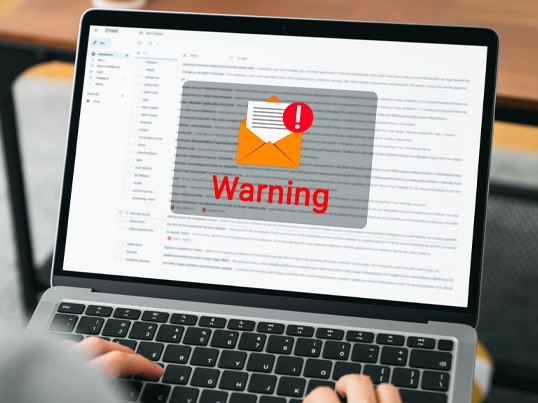
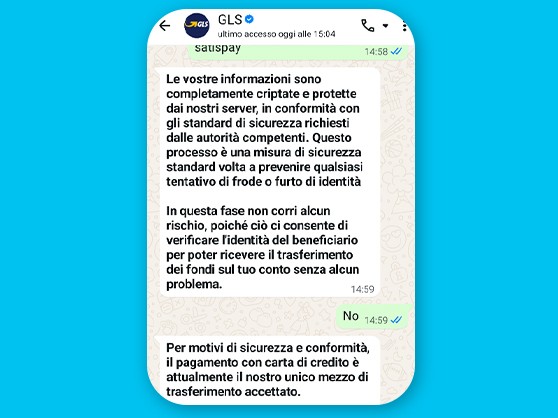
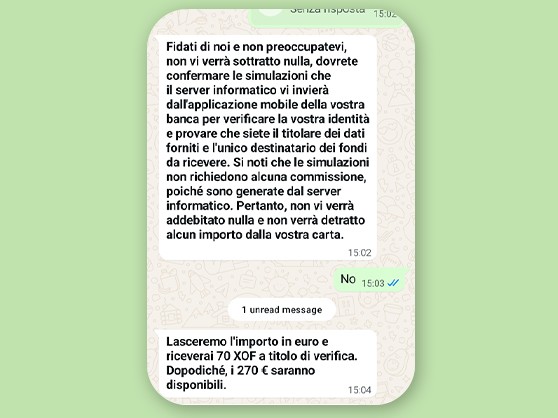
Online scams are increasingly common and can occur via email, SMS, WhatsApp and other messaging services.
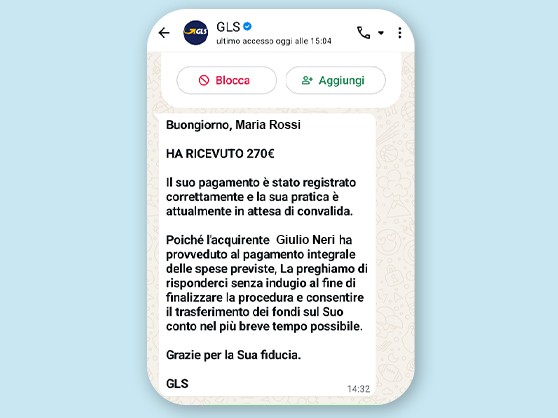
Scammers may unlawfully use the GLS name and brand to send fraudulent communications and attempt to obtain money, personal data or confidential information. Fraudulent communications may, for example:

· request small payments to “release” a shipment;
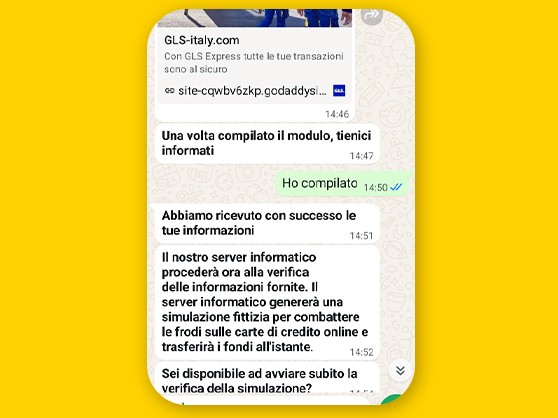
· contain links asking you to enter or update personal or banking details;
· use fake attachments or documents;
· display apparently authentic company logos and references;
· come from unrecognised email addresses, phone numbers or accounts.

Scammers are increasingly using QR codes in emails or on fake paper delivery notices. Scanning a suspicious QR code may redirect you to disguised phishing websites. GLS does not ask you to scan QR codes to make payments to release a shipment.

be careful with online scams

How to protect yourself

Before responding to a communication about a shipment, always make sure it is genuine.
If in doubt:

· carefully check the sender: official GLS emails are sent exclusively from addresses ending in @gls-italy.com. Watch out for similar-looking domains such as @gls-itali.com or @gls-consegne.it;
· do not click on links in suspicious messages;
· do not open or download attachments from unrecognised senders;
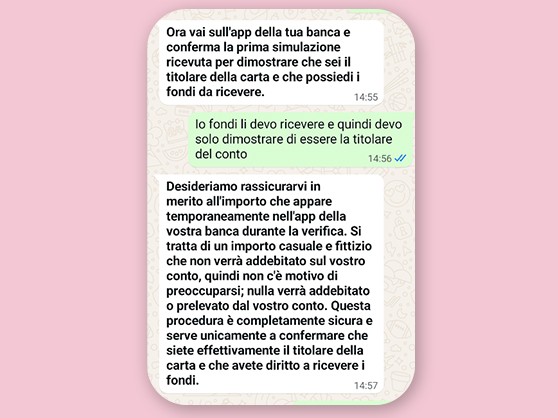
· do not provide personal data, login credentials or banking information;
· do not make payments requested through suspicious communications;
· promptly report any fraudulent communications to GLS, attaching the email you received or copying the malicious link into the body of an email sent to cybersec@gls-italy.com.
· beware of messages that create a false sense of urgency (e.g. “Your parcel will be returned to the sender unless you pay within 24 hours”). GLS will never put pressure on you in this way.

What to do if you realise you have been scammed

online shopping

Tips for online shoppers

It is important to be careful when shopping online too, especially when buying from websites or sellers you do not know:

· preferably shop on reputable websites and check the seller’s information and reviews;
· beware of offers with prices significantly below normal market levels;
· always check the seller and the terms and conditions of purchase;
· check that any amount requested on delivery matches what was agreed at the time of purchase;
· if you have any doubts about the order, the seller or the amount requested, contact the seller before accepting the delivery.


Beware of fake couriers

How fake couriers operate

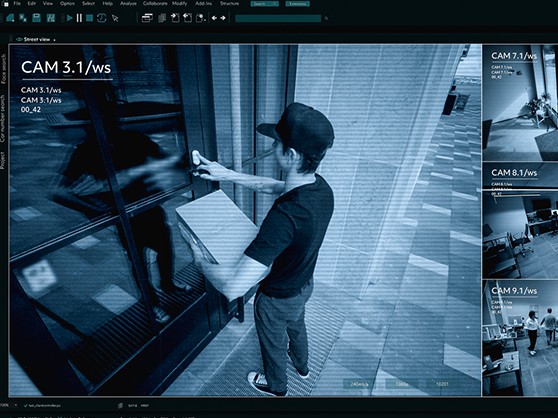
Scams can also involve people posing as drivers or couriers and pretending to be authorised to make a delivery or collect a shipment.

For example, a fake courier might claim to be replacing your usual driver or say that an error occurred during a previous delivery, and ask you to hand the goods over again.

How to spot a possible fake courier

Any behaviour or circumstances that differ from normal procedures should put you on alert. If in doubt:
· check that the vehicle being used displays the GLS logo;
· check that the driver is wearing a uniform and an identification badge;
· pay particular attention to unusual requests or procedures;
· contact your local GLS depot to verify the delivery or collection;
· do not hand over a shipment again on the basis of an unverified request.

Beware of fake job offers

GLS parcels
 

Another method used by scammers is to advertise fake job opportunities as an “agent” or intermediary.
The activity is generally presented as a part-time job and may involve receiving or collecting parcels and then forwarding them to other addresses, including abroad.
These offers may conceal fraudulent activities involving the handling of goods or money of illicit origin.
Before accepting this type of offer, always carefully verify the identity of the person offering the job and the true nature of the work involved. Agreeing to receive or forward goods on behalf of unknown individuals may expose you to legal and financial risks.

GLS is committed to preventing fraud

The safety of our customers and parcel recipients is a priority for us.
GLS continuously monitors reports and incidents relating to fraudulent activities, analysing how scams are carried out. Where necessary, GLS actively cooperates with the police, providing relevant information to support further investigations.

Security is a shared responsibility.
Fraud prevention is everyone’s responsibility.

If you receive suspicious communications or notice suspicious behaviour, always verify the information before taking action and report any unusual situations to us.